
针对市场部分客户提到的价格问题,为什么我们科汇全系列轨道为什么都采用扁铜的原因,今天就做个全面的专业的知识讲解:
照明轨道里的扁铜与圆铜,核心区别是接触面积、载流能力、散热、稳定性与成本,直接影响轨道的耐用性与可靠性。
一、外形与结构
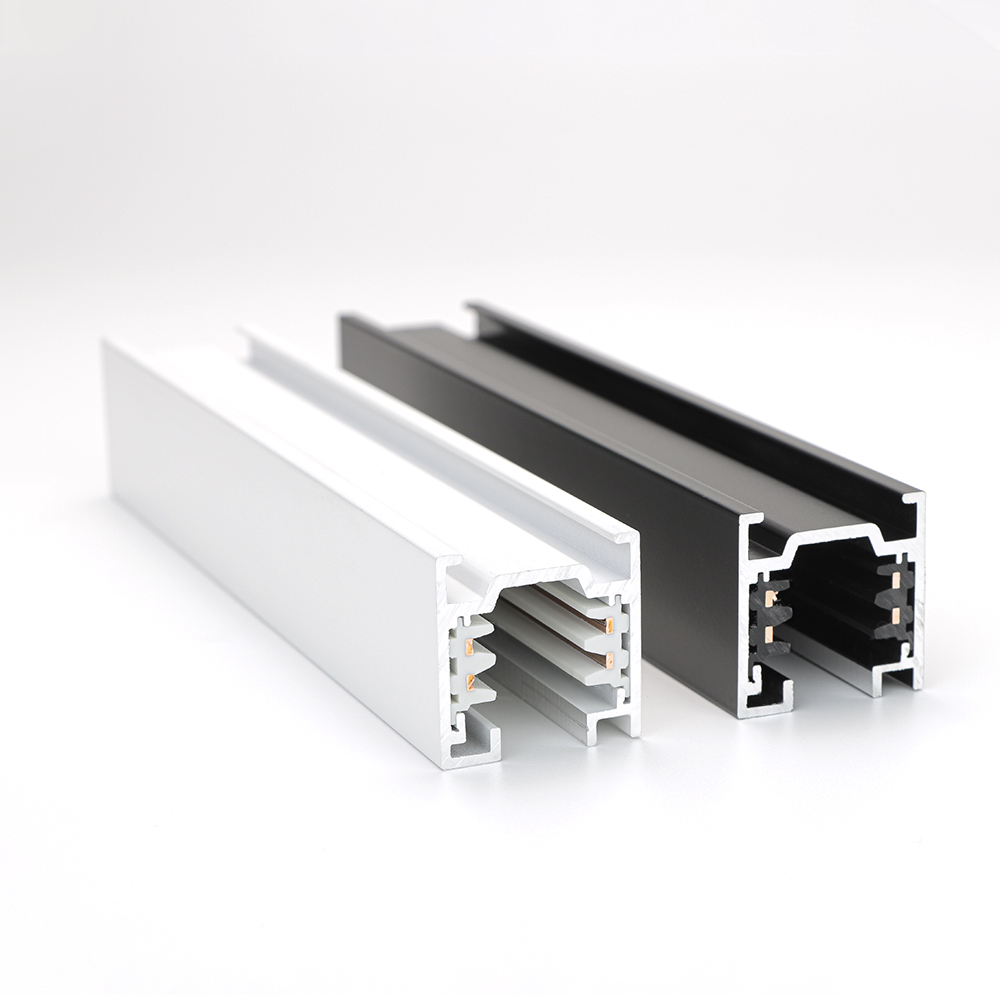
- 扁铜(扁平/方形):矩形截面,常见规格2.5×0.7mm等,多为紫铜(高纯度)。
- 圆铜(圆形):圆形截面,直径约2.0–2.5mm,多为黄铜或低纯度铜。
二、核心性能差异
1. 导电与接触
- 扁铜:接触面积大,导电更稳,不易打火;集肤效应影响小,高频/大电流更优。
- 圆铜:接触为线接触,面积小,易接触不良、发热;集肤效应损耗大。
2. 散热能力
- 扁铜:表面积大,散热快,温升低,适合长时间高负载。
- 圆铜:表面积小,散热慢,易积热,大功率场景易老化。
3. 机械与耐用性
- 扁铜:刚性好、不易变形,滑动顺畅,寿命长。
- 圆铜:较软,易弯曲变形,长期滑动易磨损、移位。
4. 载流能力
- 扁铜:同截面积下载流更高,220V常见5–10A,适配大功率灯具。
- 圆铜:载流偏低,一般≤5A,适合小功率场景。
5. 成本与材质
- 扁铜:多为高纯度紫铜(99.9%),价格偏高。
- 圆铜:多为黄铜(铜含量约60%)或铜包铝,成本低。
三、怎么选
- ? 扁铜:商用/长期点亮、大功率(如商业照明六线、四线、三线轨道,低压磁吸轨道)、追求稳定耐用,优选紫铜扁铜。
- ? 圆铜:家用小功率、预算有限、临时场景,可选用圆铜轨道。
四、快速一句话总结
- 扁铜:大接触、强导电、快散热、高稳定、偏贵。
- 圆铜:小接触、弱导电、慢散热、易变形、便宜。
Professional Explanation: Why Kehui Adopts Flat Copper Bars for All Track Lighting Products
To address customers' inquiries about pricing and elaborate on why all Kehui track lights are equipped with flat copper bars, we present a full professional introduction below.
The core differences between flat copper bars and round copper bars for lighting tracks lie in contact area, current-carrying capacity, heat dissipation, stability and cost, which directly determine the durability and reliability of tracks.
1. Shape & Structure
- Flat copper bar: Rectangular cross-section, commonly sized 2.5×0.7mm, mostly made of high-purity red copper.
- Round copper bar: Circular cross-section with a diameter of 2.0–2.5mm, generally brass or low-purity copper.
2. Key Performance Differences
1. Conductivity & Contact Performance
- Flat copper bar: Large contact area ensures stable power conduction and effectively prevents electric sparking. It is less affected by the skin effect, making it ideal for high-frequency and high-current applications.
- Round copper bar: It forms linear contact with a small contact area, which easily leads to poor contact and overheating. The skin effect causes significant power loss.
2. Heat Dissipation
- Flat copper bar: Larger surface area delivers fast heat dissipation and low temperature rise, suitable for long-term high-load operation.
- Round copper bar: Small surface area results in slow heat dissipation and heat accumulation. Components tend to age rapidly under high-power conditions.
3. Mechanical Performance & Durability
- Flat copper bar: High rigidity, resistant to deformation. It enables smooth sliding and features a long service life.
- Round copper bar: Soft texture, prone to bending and deformation. It wears out and shifts easily after long-term sliding.
4. Current-Carrying Capacity
- Flat copper bar: Higher current-carrying capacity with the same cross-sectional area. It supports 5–10A at 220V and matches high-power lamps.
- Round copper bar: Low current-carrying capacity (≤5A normally), only applicable to low-power lighting.
5. Material & Cost
- Flat copper bar: Primarily 99.9% high-purity red copper, with a relatively higher cost.
- Round copper bar: Mostly brass (approx. 60% copper content) or copper-clad aluminum, low in cost.
3. Selection Guide
? Flat copper bar: Recommended for commercial use, long-time operation and high-power scenarios, including 6-wire, 4-wire, 3-wire commercial tracks and low-voltage magnetic tracks. Choose it for superior stability and durability.
? Round copper bar: Suitable for low-power household lighting, budget projects and temporary usage scenarios.
4. Concise Summary
- Flat copper bar: Large contact area, excellent conductivity, fast heat dissipation, high stability and higher price.
- Round copper bar: Small contact area, poor conductivity, slow heat dissipation, easy deformation and low price.
网友评论仅供其表达个人看法,并不表明阿拉丁照明网同意其观点。
0 条评论


 个人首页
个人首页 账号安全
账号安全 神灯奖评审平台
登录 才能发表评论!